


 Manjri Verma
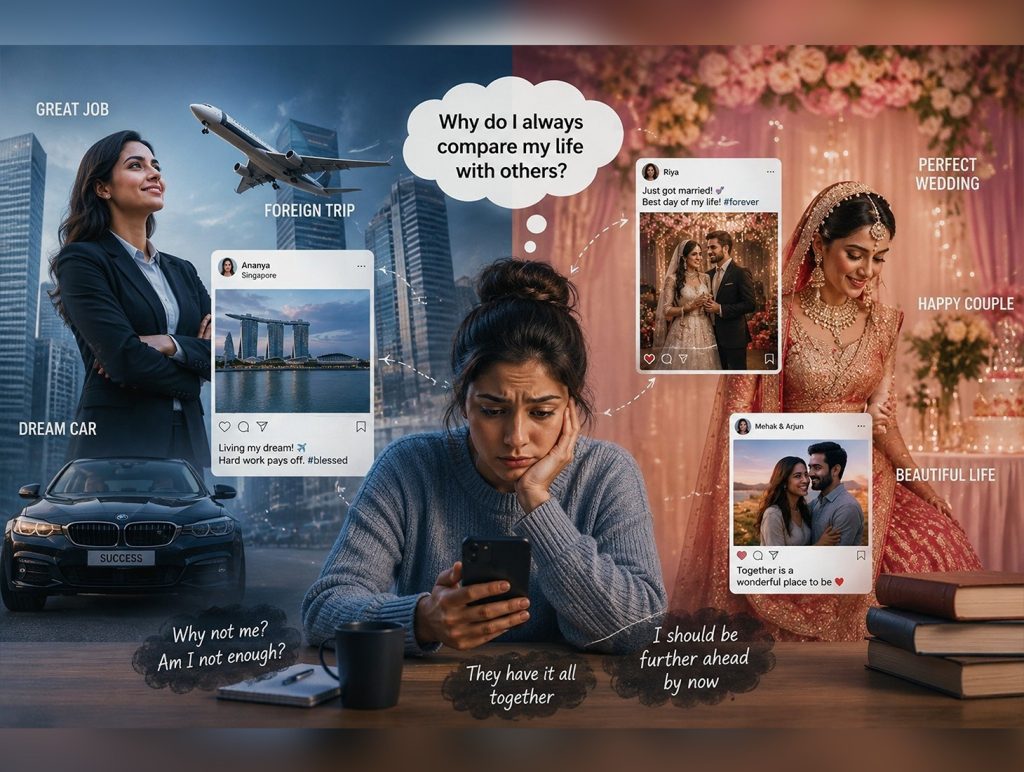
There was a question that had been quietly eating away at me, why do we compare our lives with other people’s lives?
The answer seems obvious because comparison has become almost unavoidable. Someone has better clothes. Someone has a more glamorous lifestyle. Someone is doing better in their career. Someone looks more beautiful. Someone has a relationship that appears happier. Someone seems to have everything.
And yet, strangely, both the person who appears to have everything and the person who feels they have nothing may be carrying the same dissatisfaction.
Perhaps the problem is not always what we have. Perhaps it is the invisible deadline we have created for ourselves, like a certain age by which we must have a successful career, a particular salary, a relationship, marriage, home and a particular lifestyle.
Somewhere along the way, we may have become so busy meeting these imagined deadlines that we have forgotten to actually live.
A conversation that changed the question.
One day while I was thinking about this, I received a call from my childhood best friend, Udbhav. We spoke for hours. The tension and overthinking that had been occupying my mind seemed to disappear without me even noticing.
But journalism has a habit of turning conversations into questions. I began asking him the same things I had been asking myself.
Udbhav comes from a very well off family. Yet, despite having many material comforts, he said he still finds himself wanting more, whether it is an iPhone, a higher paying job or a better lifestyle.
That conversation revealed something uncomfortable: having more does not necessarily mean feeling satisfied. The pressure to have something new and something more simply changes its form.
If there is no job, we worry about getting one. If the salary is low, we want a better package. If the career is going well, we may start thinking about marriage. Then comes the question of what kind of marriage it should be, simple or luxurious, close-knit or designed to impress others.
And social media adds another layer to this ongoing conundrum.The moment we switch on our phones, we enter a world where everyone appears to be travelling, celebrating, succeeding, falling in love or living beautifully. We know that social media does not show the whole reality, yet it can still influence how we judge our own lives.
It is a familiar frustration in many homes. Parents sometimes jokingly ask their children why they spend so much time on their phones. But perhaps the deeper question is, what exactly are we looking for there?
When Comparison Becomes Pressure
Amitav Ghoshal, a commerce student from Sector 32, insists it is important to have a support system to share one’s most intimate secrets and problems with: “These days life is so competitive and complicated that one needs not just one friend, but a complete support system to keep going. I have a couple of friends I am thick with and share all my problems and queries with, and trust me, this friend therapy actually helps one come out of the deepest pits; life sometimes throws us in.”
There is nothing inherently wrong with wanting a good lifestyle. Everyone has the right to live according to their choices and aspirations. The problem begins when our lifestyle becomes a competition to deal with.
Udbhav pointed out that comparison does not necessarily mean wishing someone else harm. Sometimes, it is simply the quiet pain of wondering why we have not achieved something we once dreamed about. We may be happy for another person and still ask ourselves, What about me?
Earlier, comparison often began at home with studies and careers amongst siblings. As people grow older, the expectations can shift towards salaries, relationships, marriages, homes and lifestyles.
Society keeps asking us questions, and sometimes we start asking those questions to ourselves.
This constant pressure can affect people’s emotional wellbeing, contributing to stress and anxiety and, in severe cases, mental health crises. Individual circumstances vary, and such outcomes can never be reduced to one single cause. But the pressure to meet social expectations is a conversation that deserves a greater attention.
Gagandeep Kataria, a practicing psychologist from Sector 43, analyses, “The way the world is heading, it is mandatory for everyone to have at least someone from their family or friends with whom they can share their problems, deepest desires, and ambitions in an uninhibited and uncensored way. This provides a healthy outlet to discuss, dissect, and understand their life and situation better. Also, everyone needs to understand that social media is just for entertainment and information assimilation. It should not be taken literally but with a pinch of salt. Everything that shines is not a diamond, and the grass, of course, is always greener on the other side.”
There Is No Common Deadline for Life
So I asked Udbhav the most important question: What is the solution?
His answer was simple: Do not copy someone else’s life. Whether it is a lifestyle, career, relationship or marriage, he said people should learn to make choices according to their own circumstances. Money should be managed wisely rather than spent merely to maintain appearances. Most importantly, he said, everyone grows at a different pace.
His analogy stayed with me: Human beings are like different flowers in a garden. Each flower has its own colour, shape and time to bloom. The garden looks beautiful precisely because they are not all the same. Maybe life works the same way.
Someone may achieve success early. Someone else may take longer. Being late in the eyes of the world does not necessarily mean being late in your own life.
As our conversation ended, I realised that perhaps the answer to my original question was simpler than I had expected. Life is meant to be lived, not constantly compared.
And perhaps having one person in our life who can make us forget our worries for a few hours is also a kind of a success, one that cannot be measured by salary, clothes, phones, followers or social status. And if you don’t have a friend or someone to confide in, then seeking a professional is not a bad idea either, Ritika Bawa, an IT professional working with a city based MNC, says, “I am living and working in this city alone. I was dealing with a lot of problems when I initially shifted here and that literally drove me to the brink of a mental breakdown, that is when I started taking professional help to deal with my loneliness, cut-throat competition being faced at my work place and the need to talk to someone who could understand my problem in a better way. I would advise everyone to seek professional help and solve their crisis before life takes a toll on anyone.There is nothing to be ashamed of in that. It is a life savior.”
But Robert Louis Stevenson said, a friend is a gift you give yourself. So investing time, effort and energy in cultivating and maintaining a good and trustworthy friend circle is a must in today’s life because friends are treasures we can cherish for life. One should also always remember, a friend in need is a friend in deed.
I have such a friend.
Do you?
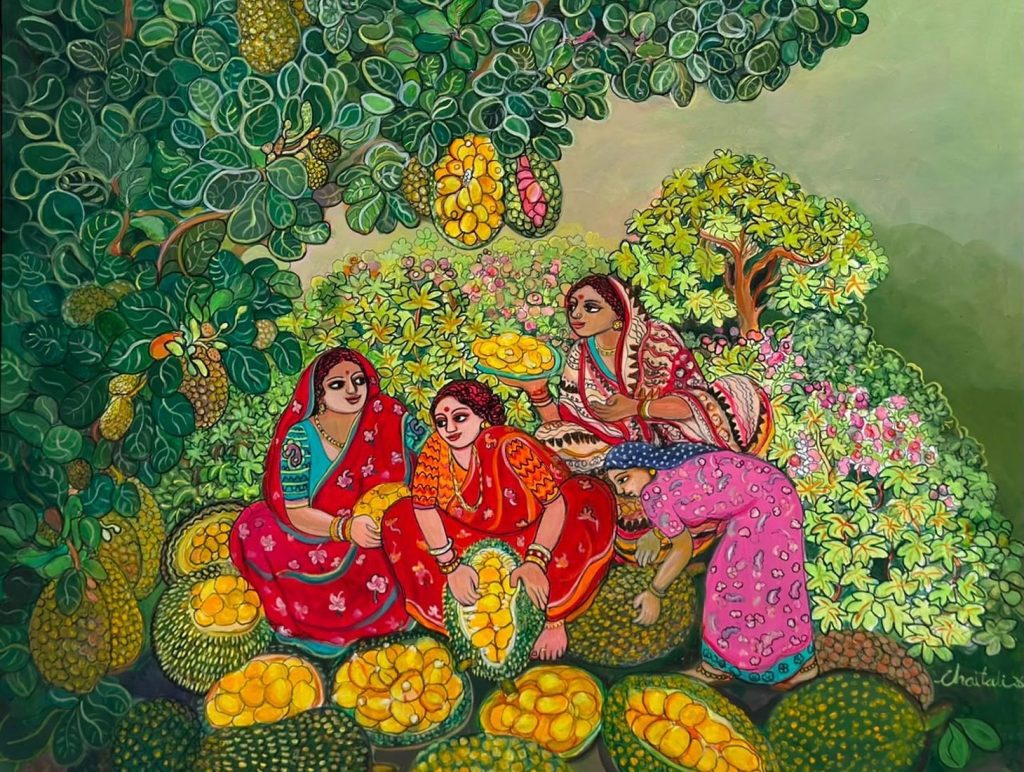
Artists come together through different forms, colours and stories, creating an exhibition that asks visitors…

The Chandigarh Bird Park, located in the heart of Chandigarh near Sukhna Lake in Sector…
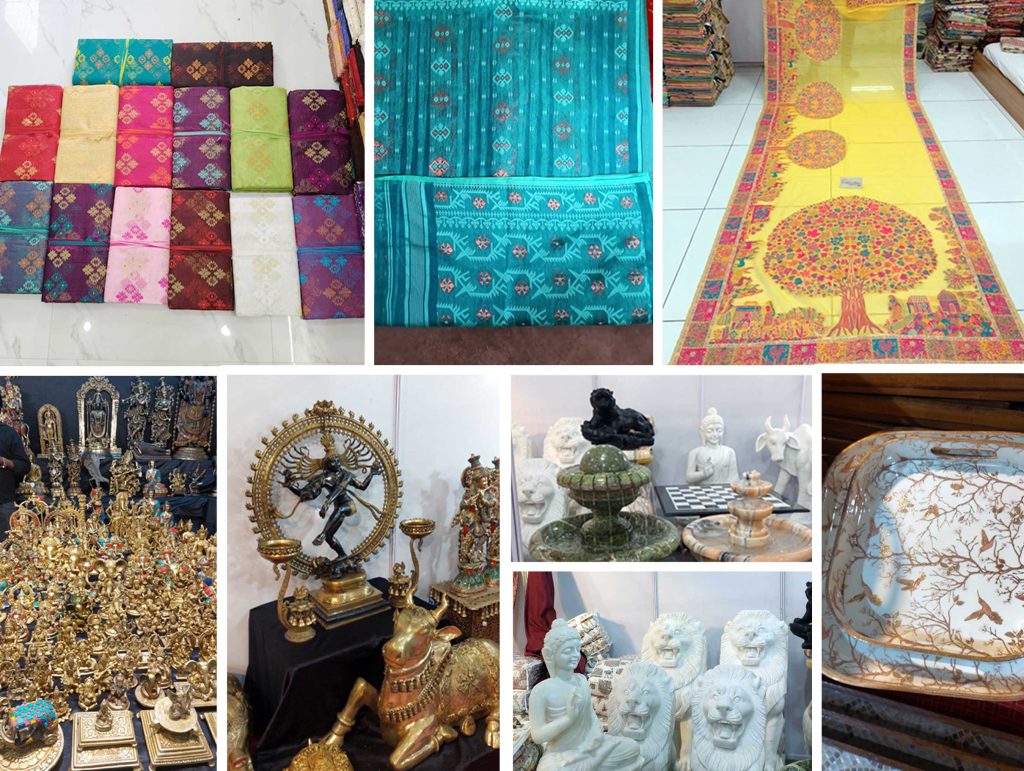
The India International Mega Trade Fair (IIMTF) has transformed Parade Ground in Sector 17 into…

The Sacred bond between a brother and a sister is a conglomeration of priceless childhood…