








 Disney Brar
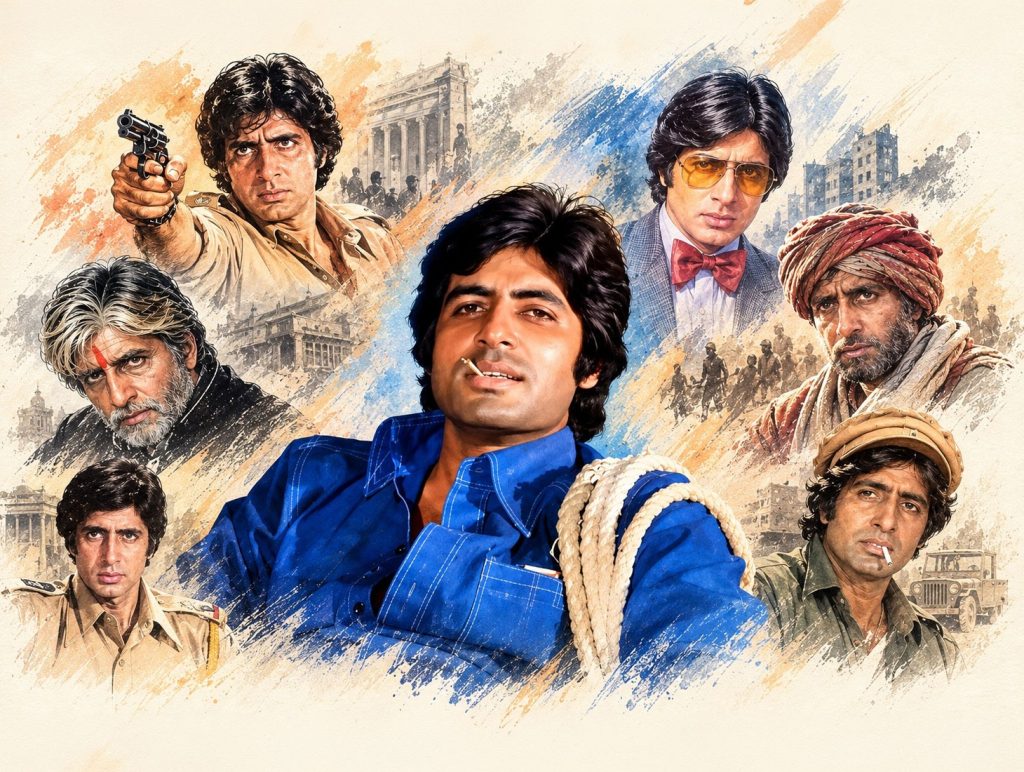

A scene unfolds, where in a dim cluttered godown on the Bombay docks, Vijay the silent, stubborn dockworker refuses to pay the illegal ‘hafta’ demanded by the Bombay mafia and is being searched for by the goons sent by a swaggering mafia henchman-Peter so that he can be taught a lesson in subservience to the mafia dons ruling Bombay. Suddenly the door bangs open and in comes Vijay with an intense baritone which slices through the still air, “Main yahan hon Peter, tum log mujhe doond rahe the, aur main tumhara zahan intezar kar raha hon”.
The camera zooms in and captures Vijay standing there, with a burning storm brewing in his intense eyes. And then comes the turning point of Deewar, when Vijay walks out of the godown bloodied and battered, but with a victory dancing in his eyes. He walks up to a tap, puts his head underneath it and shakes off the excess beads of water trickling down, as his fellow workers cheer him on. This was the scene where it was not just Vijay who walked out of the godown, but the hero who was playing the character too walked straight into cinematic immortality. This was the moment in Hindi cinema, which went down in history, as the scene which gave the industry its angry young man and the Shahenshah of Hindi cinema-Amitabh Bachchan.
Today we celebrate a star who embodies stardom like no one else. He lit Hindi cinema like a dynamite simply by straddling a beedi between his lips as he walked into a frame back in the 1970s-80s. He owns a deep baritone which redefined Hindi cinema with his breakthrough roles in films which voiced the simmering anger and frustration of the Indian youth against the prevailing poverty, unemployment and corruption. His characters became a symbol of the underdog fighting a crooked system.
Amitabh-The enduring light
Inspired by the agitations launched by Mahatma Gandhi during the Quit India Movement, poet-author Harivansh Rai Bachchan and wife Teji initially named their first-born ‘Inquilab’ but then opted for Amitabh which means enduring light. In the 1950’s-60’s, after studying at St.Mary’s and Boys High School in Allahabad, he went to boarding school in Nainital, Sherwood College. There his thespian skills were honed as he played Mayor in Gogol’s play-The Government Inspector for which he won the Kendall Cup for the best actor in 1957 at the age of 15. Then alongside his BSc from Kirori Mal College in New Delhi, he joined the theatre society of the college-The Players.
In the late 1960’s what followed was a couple of desk jobs in Calcutta, after which began Bachchan’s real struggle to find his footing in cinema, where nestled his real love. Then one day brother Ajitabh responded to an ad seeking new talent, by taking a box camera picture of his brother outside the Victoria Memorial and sent it to the Filmfare Madhuri Talent contest. But Bachchan could not crack that contest and he did not get the call he was desperately waiting for. In fact his deep baritone voice was also famously rejected by All India Radio.
Then someone told him that director K.A.Abbas was hunting for a new face and Bachchan finally got his debut in Saat Hindustani at 27 where he essayed the character of a Muslim poet who joins the nationalists to liberate Goa from Portuguese rule. This role fetched him his first National Award for the best newcomer but stardom still remained largely elusive..
Rise to stardom
He was the voice of the masses with films like Zanjeer and Deewar which cast him as an anti-establishment fighting hero who fought against the rotting system with its corruption and social inequality. Through his work and characters, Bachchan voiced the simmering anger and frustrations of the youth making him the ultimate symbol of male masochism back then.
In 1971-72, we saw Bachchan in films like Anand where he played the role of a brooding Dr. Bhasker opposite the biggest superstar of the day-Rajesh Khanna whose throne he was destined to soon dismantle. Then came his first noteworthy lead role in Bombay to Goa (1972). During this time Bachchan played many characters named Vijay in over 20 films, which became his on-screen identity and also gave birth to a generation of boys named Vijay inspired by him. With the coming in of Prakash Mehra’s Zanjeer (1973) Bachchan rose to the stature of a superstar after delivering 13 consecutive flops. This year also saw Bachchan alongside Jaya Bhaduri in the film Abhimaan, where he played the role of a jealous husband of a successful wife besides another award-winning role in Namak Haraam.
Some stars shine some become the sky
And who can get over his dialogue, “Aaj Khush Toh Bahut Hoge Tum’ from Deewar (1975) where he played a dockworker. This year also saw Bachchan in the blockbuster hit Sholay in which he played Jai-a fearless petty criminal turned hero, after which came Yash Chopra’s Kaala Pathar. In 1976 we saw Bachchan and Rekha do their first film together as romantic leads, starting with Do Anjaane. The pair went ahead to do 12 films together in five years, with the icing on the cake being, the extra-marital affair melodrama-Silsila (1981). His other prominent hits also include Don, Muqaddar Ka Sikander, Amar Akbar Anthony, Chupke Chupke and Agneepath.
In his later years he seamlessly transitioned into mature character driven roles like Mohabbatein, Kabhi Kushi Kabhi Gham and Pink which proves his enduring relevance spanning across generations.
A Resurgence which resounds
Like a phoenix, Bachchan who had overcome initial career struggles, also saw a slump in the 1990s and suffered a near-fatal injury on the sets of the film Coolie (1982) bounced back into the mainstream after a political faux pas with his entry into Lok Sabha and financial struggles with ABCL in the 1990s. He reinvented himself through character-driven cinema like Black, Paa, Cheeni Kam and Piku. Such was his comeback that we also saw Bachchan in the critically-acclaimed Hollywood film-The Great Gatsby (2013). His mega-hit television show Kaun Banega Crorepati continued to rake in the prime time ratings.
Bachchan is the recipient of numerous honours, he has won multiple National Film Awards, Filmfare Awards and India’s highest civilian awards like the Padma Shri, Padma Bhushan, Padma Vibhushan and the prestigious Dadasaheb Phalke Award.
The art of being Amitabh
Amitabh Bachchan is not just the star of the millennium but is a case study in how a person should live his life in a righteous way despite owning all the success, name and fame in the world. Forever composed, well articulated, resilient, extremely hard-working, disciplined and punctual. Bachchan saheb is a living proof of what happens when perseverance meets purpose and superstardom meets humility.
Happy Birthday Bachchan saheb. May your stardom keep shining like the brightest star in the sky. Akhir ab bhi line udhar se hi shuru hoti hai jahan aap khade ho jayein.
Can Artificial Intelligence (AI) recreate the emotions that make cinema memorable? Can it produce stunning…
Bollywood’s bhaijaan Salman Khan is ready to turn the camera on himself and this time…
Get ready for a weekend filled with love, laughter, and a generous dose of husband-and-wife…
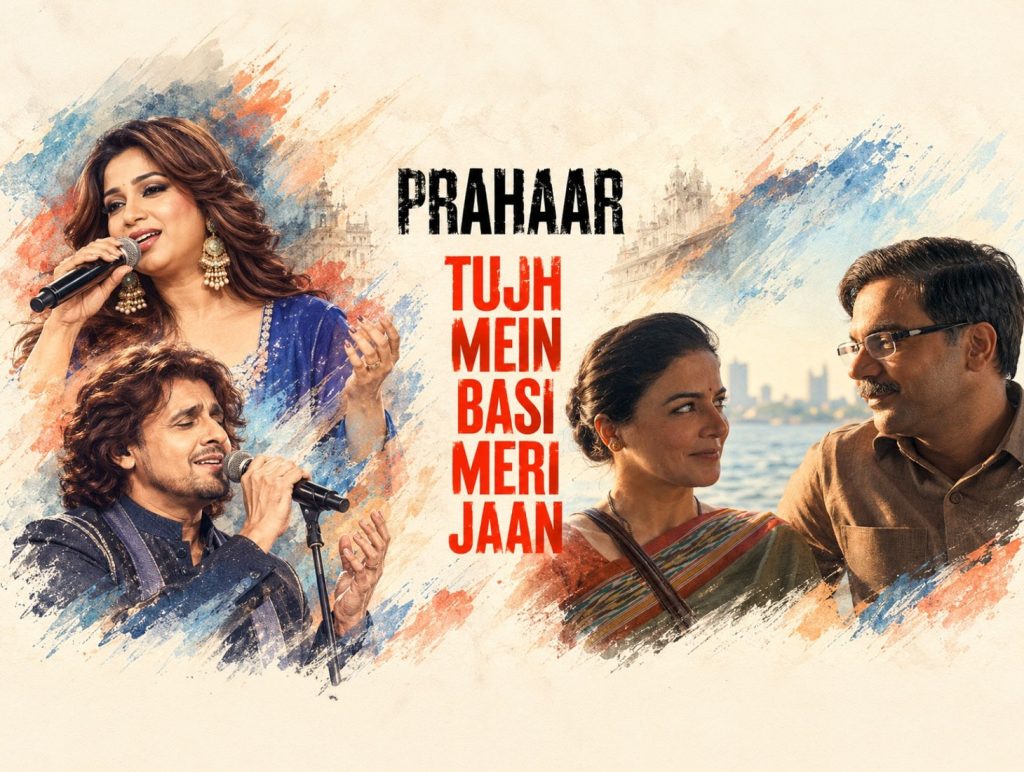
Shreya Ghoshal and Sonu Nigam have reunited for romantic song ‘Tujh Mein Basi Meri Jaan’…