








 Manjari Verma
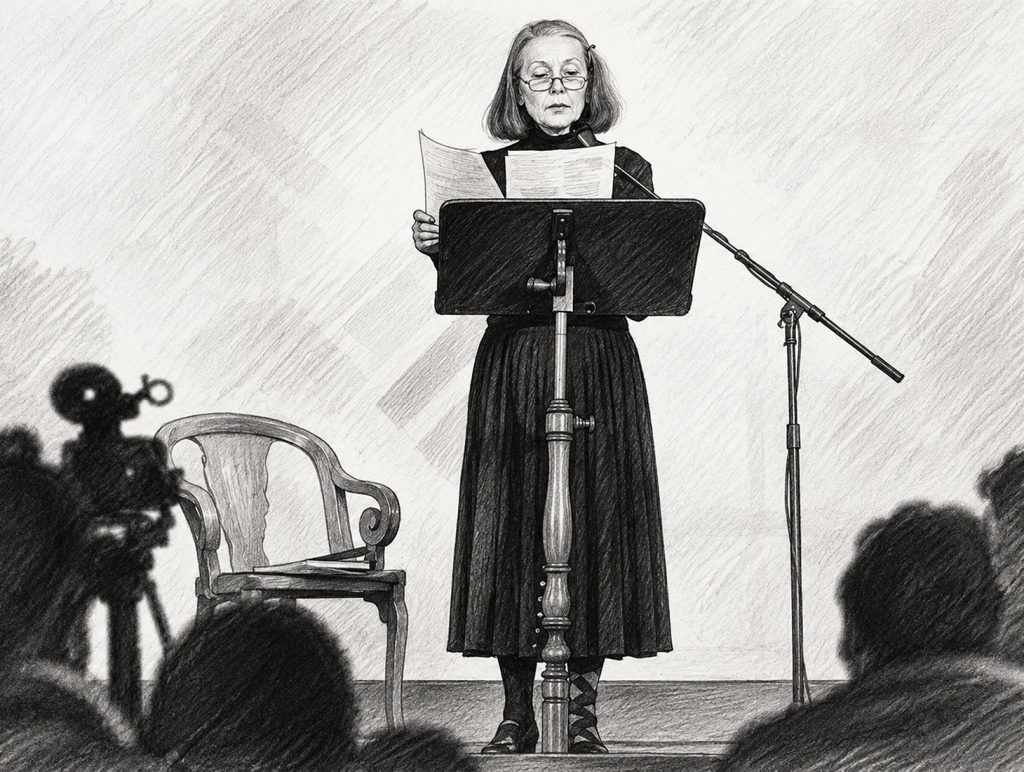
Some writers help readers understand the world. Others change the way they understand their own feelings. Canadian poet and essayist Anne Carson has spent decades doing both, building a literary career that brings ancient Greek thought into conversation with modern experiences of love, loss and identity.
Carson has been awarded the 2026 Nobel Prize in literature for her innovative body of work, which engages with classical traditions while creating new possibilities for contemporary writing. The Swedish Academy recognised her ability to challenge conventional literary forms through an inventive combination of poetry, prose and scholarship.
Born in Toronto, Canada, on June 21, 1950, Carson developed an interest in classical languages that would shape her professional life. She studied at the University of Toronto, earning a doctorate in Classics in 1981, and went on to combine writing, translation and university teaching.
Rather than treating ancient Greek literature as a distant academic subject, Carson uses it to examine questions that remain relevant across generations. Her work draws on classical myths, philosophy and poetry to explore the uncertainties of human relationships and the complexities of being human.
One of her best-known books, Eros the Bittersweet, published in 1986, examines desire through ancient Greek literature and the poetry of Sappho. It considers how longing can be shaped by distance, absence and the desire for something beyond reach.
In Autobiography of Red (1998), Carson reimagines an ancient Greek myth through a modern verse novel. The work combines mythological material with contemporary storytelling, exploring vulnerability, identity and desire without being confined to traditional narrative forms.
Her 2001 book The Beauty of the Husband: A Fictional Essay in 29 Tangos examines love, marriage and infidelity through an experimental structure. The work won the TS Eliot Prize for Poetry in 2001.
Carson’s writing also reaches into the more private territory of grief. Nox, published in 2010, was created in memory of her brother, Michael. Combining literary and visual elements, the work reflects on memory, family and the difficulty of reconstructing a life through what remains.
Carson’s strength lies in her refusal to keep poetry, prose, translation and academic research separate. Her writing asks readers to approach familiar experiences from unfamiliar angles, while demonstrating how classical literature can continue to speak to contemporary life.
Her contribution extends beyond individual books. By making ancient texts part of modern literary conversations, she has opened fresh ways for readers to engage with history, language and human emotions.
Her career has also brought recognition through honours including the MacArthur Fellowship, the TS Eliot Prize and the Griffin Poetry Prize.
The Nobel Prize acknowledges this sustained literary experimentation. Carson’s achievement lies not simply in writing about universal experiences, but in finding new forms through which those experiences can be understood. Her work demonstrates that literature can cross centuries and genres while continuing to question, surprise and move its readers.